Genel
Global wind industry reaches one terawatt milestone in June


The wind industry is today celebrating the sector passing the landmark figure of one terawatt of global installed capacity. It has taken more than forty years to reach the 1TW milestone, although with the wind industry continually gaining momentum, the next TW will take less than 7 years to install, according to data from the Global Wind Energy Council (GWEC), which is organising a series of events to mark the achievement.
This capacity milestone pulls into focus the fundamental role wind energy is playing in decarbonising the global power system and helping the world reach its climate and energy goals.
According to GWEC’s data, recently completed wind power projects in China, the USA, Morocco and Europe have pushed the capacity across the 1TW threshold as the industry delivers on the ever-growing ambitions of governments around the world. The spread and diversity of these projects highlights the global reach of modern wind technology, which has developed rapidly in the last forty years from the early innovative designs developed in family back gardens by pioneers and visionaries like Henrik Stiesdal, who established the basis for the modern wind turbine – known as “the Danish Concept”, in the late 1970s.
Ben Backwell, CEO of the Global Wind Energy Council, said: “This is an enormous moment for the wind industry, but it is also a moment to celebrate for the whole world – this landmark achievement shows the path to a clean energy future is here. Renewable energy must be at the centre of our collective drive to net-zero, with wind energy – along with solar PV and other renewable energy technologies – the foundation on which our new energy system is being built.
“The stories of early wind pioneers have inspired a generation of innovators to turn these early ideas into a pillar of the world’s energy system – enabling new clean industries and creating millions of clean jobs all over the world. It is also time to recognise a new generation of pioneers that are already driving the next era of wind energy. Building to 2TW by 2030, and eventually to 8TW by 2050, will require unprecedented collaboration and cooperation across the world, and the creation of a huge and diverse new workforce. At GWEC we are looking forward to working with governments, companies and communities around the world to make this vision a reality.”
Jonathan Cole, speaking as he was appointed GWEC’s new Chairman, said: “Thanks to the ambition, ingenuity and determination of a pioneering coalition of innovators, GWEC and its member companies, we are soon to reach the historic milestone of 1 Terawatt of wind power installed globally. While this is an immense achievement, it still represents only a small portion of what we must build in the coming years in order to decarbonise our planet.
“To avert a climate catastrophe with devastating impacts on communities and ecosystems everywhere, we must rapidly transform our economies, scaling up wind capacity to reach at least 8 Terawatts by mid-century. There is no time and no need to delay. In all scenarios, investing in wind energy will deliver clean, reliable, affordable power, boosting security of supply and price stability and creating sustainable jobs. In order to achieve these benefits, the private and public sectors must come together to accelerate investment and clear the path for delivery.”


Our latest issue is packed with cutting-edge technologies, key projects, and insightful interviews with industry experts. Stay ahead in the energy sector by exploring the latest updates!
🔗 Click here to read the latest issue!
🔗 Click here to access the archive!
Featured Topics:
Industry Innovations: Stay informed about the latest advancements in wind energy technology, sustainable solutions, and efficiency-boosting developments that can set you apart in the sector.
Expert Interviews: Gain valuable insights from industry leaders on future trends and strategic forecasts shaping the wind energy market.
Successful Projects: Discover global best practices and groundbreaking projects that offer real-world applications to enhance your own initiatives.
In-Depth Market Analysis: Understand the impact of economic trends and market dynamics on the wind energy sector with our expert evaluations.
Why Follow Wind Energy Magazine?
✔️ Up-to-Date Information: Stay on top of the latest industry trends in every issue.
✔️ Expert Opinions: Learn from the analyses of top industry professionals.
✔️ Practical Applications: Turn theory into practice to strengthen your projects.
✔️ Energy Efficiency & Sustainability Solutions: Explore innovative approaches to lead the industry.
Start reading now and stay ahead with the latest industry insights!
Enjoy exclusive content and seamless digital access with subscription benefits. The March-April issue is waiting for you!

Doğuhan Enerji, which provides turnkey services in road, platform, and foundation construction, electrical and cabling works, substation installation, control building construction, and overhead line construction for wind energy projects, also strengthens the European renewable energy sector with Helios Energy, its Romania-based subsidiary established in early 2022.
Operating a consistently with precision and dedication across all project scales, ranging from 1 MW to over 100 MW, Doğuhan Enerji has grown by successfully delivering some of the market’s largest and most significant projects. With 28 years of industry presence and participation in over 200 projects, the company has completed the construction of more than 1,500 turbines, contributing to a total capacity exceeding 2,500 MW. Beyond its core expertise in wind energy projects, Doğuhan Enerji has been providing solutions for solar power plant projects globally for the past three years. Through its European subsidiary, Helios Energy, the company has undertaken the construction and installation of the 155 MW Ratești Project, the largest solar power plant in Eastern Europe, completing it within a record-breaking period of just eight months.
Helios Energy, which has achieved one of the fastest growth rates in the sector by reaching a 600 MW project portfolio within just three years, provides end-to-end turnkey solutions for solar energy projects, covering every stage from construction and foundation works to mechanical and electrical installations, as well as substation construction, SCADA integration, and commissioning processes. In addition to its operations in Romania, Helios Energy is also active in Germany, Hungary, and Italy. Globally, the company has already secured agreements for 210 MW of wind and solar power plant projects to be delivered by 2025.

Striving for 20% Growth
Building a project portfolio that surpasses 2,500 MW, Doğuhan Enerji continues to leave its mark wherever the wind blows, actively participating in project developments across almost every region of Türkiye. To further expand its operational capacity, the company has been investing in machinery and equipment and plans to continue these investments throughout 2025. With the initiatives launched in the last quarter of 2024, Doğuhan Enerji aims to grow its operations in Türkiye and international markets by 20% in 2025.


The global Wind Power Market size was valued at USD 95.16 billion in 2023 and is projected to grow from USD 106.42 billion in 2024 to USD 254.27 billion by 2031, exhibiting a CAGR of 13.25% during the forecast period. Growing adoption of offshore wind farms and surge in wind energy projects are augmenting market growth.
The growing adoption of offshore wind farms is a significant trend in the wind power market. Offshore wind farms are being increasingly developed due to their numerous advantages over onshore counterparts. They benefit from stronger and more consistent wind speeds prevalent over the ocean, leading to higher energy yields and improved efficiency.
Additionally, offshore wind farms reduce land use conflicts, as they are situated away from populated and agricultural areas. Government incentives and advancements in technology are key factors fueling this trend. Many countries are offering subsidies, tax incentives, and supportive policies to promote the development of offshore wind projects.
Technological advancements, such as the development of larger and more efficient turbines designed to withstand harsh marine environments, are making offshore wind farms more viable and cost-effective. This trend contributes to lowering carbon emissions and reducing reliance on fossil fuels, thereby playing a crucial role in meeting the increasing global demand for renewable energy sources.
Wind Power Market Trends
The integration of wind power with energy storage systems is an emerging trend that addresses its intermittency, which represents a significant limitation of wind energy. By pairing wind turbines with advanced storage solutions, such as lithium-ion batteries or pumped hydro storage, the energy generated during peak wind periods is stored and used during times of low wind activity or high demand. This trend is gaining significant traction due to advancements in energy storage technologies, which are enhancing efficiency and cost-effectiveness. The combination of wind power and storage systems enhances the reliability and stability of the electricity supply, making wind energy a more viable and consistent source of renewable energy.
Additionally, integrated storage systems help mitigates the impact of sudden fluctuations in wind power generation on the grid, thereby reducing the need for backup fossil fuel-based power plants. This trend is supported by government policies and incentives aimed at promoting the adoption of renewable energy and energy storage technologies.

Wind Power Market Regional Analysis
Based on region, the global market is classified into North America, Europe, Asia-Pacific, MEA, and Latin America. Asia-Pacific wind power market accounted for a significant share of 36.25% and was valued at USD 34.50 billion in 2023, reflecting the region’s significant commitment to renewable energy development. The rapid expansion of wind power in Asia-Pacific is reinforced by the growing energy needs of its populous nations, particularly China and India, which are making substantial investments in both onshore and offshore wind projects. China has emerged as major country in wind power capacity due to its aggressive renewable energy targets, extensive government support through subsidies, and favorable policies.
Moreover, India’s national wind-solar hybrid policy and other initiatives are bolstering wind energy deployment. The region’s abundant wind resources, coupled with technological advancements and decreasing costs of wind power generation, are propelling domestic market growth. Additionally, the increasing environmental awareness and the urgent need to reduce greenhouse gas emissions are prompting countries across Asia- Pacific to adopt wind energy as a key component of their energy strategies.
North America is set to grow at a robust CAGR of 13.35% in the forthcoming years, largely attributable to several factors such as ongoing technological advancements, supportive regulatory frameworks, and increasing investments in renewable energy. The incentives are prompting utilities and independent power producers to invest in new wind projects. Additionally, advancements in wind turbine technology, including the production of larger and more efficient turbines, are reducing the cost of wind energy, thereby enhancing its competitiveness compared to traditional energy sources.
For instance, in 2023, according to US Department of Energy, Wind energy in the United States contributed to the reduction of 336 million metric tons of carbon dioxide emissions annually, which is equivalent to the emissions generated by 73 million cars.
Canada is further supporting this growth with its favorable wind resources and supportive provincial policies aimed at expanding renewable energy capacity. The commitment to sustainability and reducing carbon emissions is leading to the widespread adoption of wind energy in North America.


 Events8 years ago
Canada and Turkey women working in the renewable energy sector in met
- Turbine Technologies8 years ago
GE’s Haliade-X 12 MW prototype to be installed in Rotterdam
- Operations and Maintenance8 years ago
GENBA is on the rise; another milestone passed by in global existence
- Genel11 years ago
EWT launches the DW61, It’s most efficient and high energy producing wind turbine
- Genel11 years ago
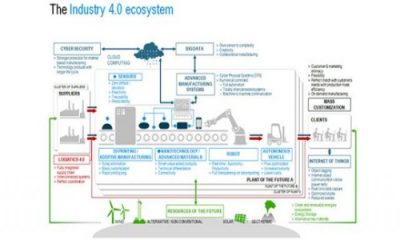
Internet of things will empower the wind energy power plants
- Turbine Technologies8 years ago
İğrek Makina focused on developing and producing Machine Tools and Wind Energy Turbines
- Legal & Financial Solutions8 years ago
Demand/Supply – Renewable energy with guarantees of origin (GO)
- Events8 years ago
Key Players from 10 Nations will Show Their Strong Positions at APWEE
- Turbine Technologies6 years ago
ENERCON installs E-160 EP5 prototype
- Turbine Technologies7 years ago
The Nordex Group receives first order for Delta4000 turbines from the USA
- Turbine Technologies8 years ago
ENERCON and Lagerwey together develop two new WEC types
- Genel10 years ago
Zorlu energy envisages a bold new future based on renewables