Onshore
Opposing onshore UK windfarms “means higher energy bills”


Ministers must come clean to households about the higher energy bills they face if the UK continues to deter new onshore windfarms, the government’s top climate change adviser has said.
Lord Deben, the chair of the committee on climate change (CCC), said there was no logical argument against onshore wind turbines in the parts of the UK that want them.
The Conservative peer said the technology was the cheapest form of electricity generation and he hoped the government would rethink its opposition to subsidies to it.
The government ended subsidies for the windfarms in 2015 but the energy minister Claire Perry has recently said she is “looking carefully” at a U-turn for windfarms built in Wales and Scotland. Last week, the government gave its backing to windfarms on remote islands, such as the Isle of Lewis.

Lord Deben, Chair of the Committee on Climate Change (CCC)
Deben told the Guardian: “There is no doubt, and I feel very strongly about it, that onshore wind is the cheapest form of electricity. If the Scots want to have it, on which basis should we say they shouldn’t have it?”
Advocates believe onshore windfarms could be built for subsidies guaranteeing prices as low as £50 per megawatt hour – below the average £62.14 awarded to the latest offshore windfarms and far lower than the £92.50 for the Hinkley Point C nuclear power station.
The payments are a top-up on the wholesale electricity price of around £45/MWh, with the difference paid by householders through their energy bills. Hinkley alone is expected to add £10-15 to annual bills by 2030.
“If you don’t build onshore wind, the government has to say how much of an extra cost this is to the public,” said Deben.
The CCC advises the government on how to meet its legally binding climate targets. Deben, who as the Conservative MP John Gummer was the environment secretary from 1993 and 1997, added that the government has to make “major changes” to meet its carbon targets for 2025 and 2030, implying that a shift on onshore wind could be one of those.
Big British, German and Spanish energy companies have been lobbying the government for a shift on onshore wind.
Keith Anderson, the chief executive of ScottishPower, said it was “completely bonkers” that the windfarms were ineligible for subsidies, given they were low cost and low carbon.
“2018 has to be the year we secure the future of onshore wind,” he told a recent industry event.
Millions of households have seen their energy bills rise in the past few weeks. All of the big six suppliers have increased their prices, blaming government policy costs such as the clean energy subsidies, along with rising wholesale costs.
Deben also issued a challenge to housebuilders to make new homes more efficient, saying they had to face up to the “social inequity” of future generations facing unnecessarily high energy bills.
“Energy efficiency is a social issue. No house should be built to condemn people in the future to having to pay a great deal for their energy,” he said.
He backed better enforcement of building regulations, saying local authorities did not have the resources to check new homes properly.
The peer also called on mortgage lenders to begin tying the energy efficiency of properties to the amount buyers can borrow, an idea being given a trial in Wales. His comments were echoed this week by the CCC’s chief executive, Chris Stark, who tweeted that it was “daft that we don’t give greater priority to household energy efficiency”.
Deben still feels new nuclear power is needed as part of the UK’s efforts to cut carbon emissions. However, he said new technology and the falling costs of renewables meant the challenge of ensuring energy security was not as great as in the past.
“The government has got to recognise that keeping the lights on, which is its first worry, is much easier than thought because you can get a huge amount of energy from offshore wind, smart grids and short-term battery storage.”
A spokesperson at the Department for Business, Energy and Industrial Strategy (BEIS) said: “The government does not believe that new large-scale onshore wind power is right for England but it could be right for other areas, where local public support exists.” (Source: theguardian.com)


Doğuhan Enerji, which provides turnkey services in road, platform, and foundation construction, electrical and cabling works, substation installation, control building construction, and overhead line construction for wind energy projects, also strengthens the European renewable energy sector with Helios Energy, its Romania-based subsidiary established in early 2022.
Operating a consistently with precision and dedication across all project scales, ranging from 1 MW to over 100 MW, Doğuhan Enerji has grown by successfully delivering some of the market’s largest and most significant projects. With 28 years of industry presence and participation in over 200 projects, the company has completed the construction of more than 1,500 turbines, contributing to a total capacity exceeding 2,500 MW. Beyond its core expertise in wind energy projects, Doğuhan Enerji has been providing solutions for solar power plant projects globally for the past three years. Through its European subsidiary, Helios Energy, the company has undertaken the construction and installation of the 155 MW Ratești Project, the largest solar power plant in Eastern Europe, completing it within a record-breaking period of just eight months.
Helios Energy, which has achieved one of the fastest growth rates in the sector by reaching a 600 MW project portfolio within just three years, provides end-to-end turnkey solutions for solar energy projects, covering every stage from construction and foundation works to mechanical and electrical installations, as well as substation construction, SCADA integration, and commissioning processes. In addition to its operations in Romania, Helios Energy is also active in Germany, Hungary, and Italy. Globally, the company has already secured agreements for 210 MW of wind and solar power plant projects to be delivered by 2025.

Striving for 20% Growth
Building a project portfolio that surpasses 2,500 MW, Doğuhan Enerji continues to leave its mark wherever the wind blows, actively participating in project developments across almost every region of Türkiye. To further expand its operational capacity, the company has been investing in machinery and equipment and plans to continue these investments throughout 2025. With the initiatives launched in the last quarter of 2024, Doğuhan Enerji aims to grow its operations in Türkiye and international markets by 20% in 2025.

Onshore
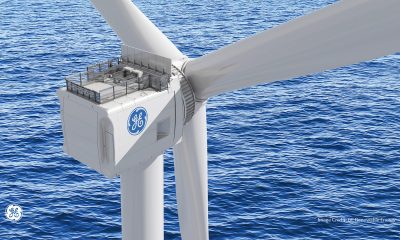
All the Pretty Workhorses: Giant Wind Farm Comes to New Mexico, Featuring GE Vernova’s 3.6-154 Turbines

Getting renewable electricity to big population centers is a growing challenge in the United States, but in the high desert of central New Mexico a plan is coming together. There, near the tiny town of Corona, GE Vernova will deploy 674 of its new “workhorse” 3.6-154 wind turbines* for the SunZia project and its developer, Pattern Energy. When completed in 2026, this colossus of a project will weigh in at a total 3,500 MW, making it the largest wind farm — and in fact the largest renewables project — in the Western Hemi- sphere, providing enough power for some 3 million people.
Spread out over a million acres, SunZia’s ambitious scope has been compared to the Hoover Dam. But it has a leg up on that landmark project: Back in the 1930s, the U.S. didn’t have access to the fast transmission technology available today. SunZia will send its wind-generated electricity through high-voltage direct current cable (HVDC) to Phoenix, where the power can be sent on ward to markets in Arizona and California. “This is just the kind of project,” says Steve Swift, chief commercial officer at GE Vernova’s Onshore Wind business, “needed to really decarbonize the U.S. and stay on the path to climate goals.”
To bring a project like this to fruition requires complex coordination. One of the biggest challenges in the burgeoning renewables space is the supply chain. Manufactured parts and materials like steel have to converge at the right points, at the right time, and must fit onto trains or ships. If you build your components so that they fit nicely with standard construction equipment, you’ll reach the finish line much faster. GE Vernova, which is providing 74% of the turbine capacity of Sun- Zia, has contracted to manufacture some of the turbine towers in Belen, New Mexico, near the project site, saving time and costs. (Facilities in Pueblo, Colorado, and Amarillo, Texas, will also manufacture towers.) The hubs that enable the turbine blades to spin, as well as the big rectangular box that holds the electronics, gears, and motor, known as the nacelle, will be manufactured by GE Vernova in Pensacola, Florida.
Putting it all together in a sparsely populated part of New Mexico is not easy, but the reduced complexity of the workhorse turbine makes the project and logistics execution much simpler. Not nearly as large as an offshore giant like GE Vernova’s 14-MW Haliade-X, the 3.6-154 turbine possesses what Kevin Siwik, director of North American sales at GE Vernova Onshore Wind, calls an efficient “logistics and construction envelope.”
This is a machine that can be delivered and installed at rapid scale compared with much larger machines, where you might trade logistics and construction efficiencies for larger nameplates — i.e., higher maximum outputs — “but won’t install at the same pace,” he says. “So this really is intended to be logistically friendly, in a quick time frame.” Siwik points out, for example, that the fleet of commercially available construction cranes in the region are the right fit for GE Vernova’s more compact workhorse, and wouldn’t be able to handle larger turbines. And as with any construction project, time is money: The faster the turbines are erected, the faster the return on investment.

Modeling the Landscape
SunZia is spread out over a million acres, on a rectangle of land roughly 80 by 30 miles, with GE’s turbine array covering a 45-by-25- mile portion of the whole. According to Matt Lynch, commercial director for North America at GE Vernova Onshore Wind, the site itself is challenging, because at that scale you have a lot of variance in topography. Computer modeling is used to find exactly the right spot for each of GE Vernova’s 674 turbines. “From the engineering perspective, having one single product fitting all those locations is a challenge,” says Soner Ozkan, senior account manager for Pattern Energy at GE Vernova Onshore Wind. Moreover, to send renewable electricity over the highlyefficient HVDC cable, which prevents the kind of line losses typical of older wires, the new wind power will have to be converted to direct current (DC) on-site before being converted back to alternating current (AC) in Phoenix.
That’s where another wing of GE Vernova steps in: Financial Services and Consulting Services. Regarding Consulting Services’ support, Ozkan says, “They have all the PhDs and the modeling capabilities. And we have weekly discussions with them.” While Hitachi Energy is handling the HVDC part of the construction project, Ozkan, Siwik, and Lynch stress that ongoing cooperation is needed to make sure all the technology works together.
GE Vernova’s services are integrated into the product development cycle, and for SunZia this meant providing customized software to the turbines, enabling them to work more efficiently with the long distance HVDC line. In a region known for lightning strikes, for example, turbines and the mini grid in which they’re nested are vulnerable to power spikes. But the system is designed to be able to respond to those surges within 50 milliseconds, ensuring that equipment is protected.
In addition, Financial Services assisted SunZia in reaching financial close with a sizable commitment to finance the monetization of future tax credits. In this way, GE Vernova offers a unique set of full-stack solutions, from modeling to financing, differentiating it from competitors that are unable to offer the same type of one-stop-shop approach.
Lynch says that sequencing a mega-project like SunZia is also crucial so that each completion goal is reached at the right time, in the right order: “What’s the best execution plan? What’s the best project cycle — not trying to make too aggressive a schedule, where neither party would succeed? What are the milestones? What’s the commercial operation date?”
Just one of the major tasks that needs to be addressed at a project like SunZia is establishing road access, a delicate operation required not only for building a pad for each turbine but for maintenance later on. The developer, Pattern Energy, has worked closely with the National Audubon Society to address the multiple environmental challenges involved in building such a big infrastructure project on healthy rangeland, as well as the impact of the route taken by its 550-mile transmission line across two states.
This is not the first time Pattern Energy and GE Vernova have danced together in the desert. The collaboration on SunZia grew out of the very successful 1,050-MW Western Spirit wind project, a nearby series of four clusters that is now operational after completion early last year. Western Spirit itself was a break- through. ”That was the largest single-phase installation to happen in the United States at one time, truly ushering in a new era of large- scale projects,” Siwik says. The workhorse turbine used in much of the Western Spirit project was a 2.7-MW machine with a rotor diameter of 127 meters (416 feet). Today’s workhorse, the 3.6-154 unit for SunZia, will have a rotor diameter of 154 meters (505 feet).
“Our outstanding performance in Western Spirit is really what led us here,” says Swift. “That project was built by the same parties — built on schedule, and on budget. Some call it one of the best executions through the pandemic they’ve ever seen.” By the time SunZia is completed, the Pattern Energy and GE Vernova teams will have together delivered a whopping 4.3 gigawatts of new renewable power across the western United States. Western Spirit has historically worked with other suppliers but is increasingly turning to GE as a favored project partner.
“SunZia is an investment in America’s energy future that will pay strong dividends, including more than $20 billion in expected economic impact, over 2,000 new jobs, and clean power for 3 million Americans,” says Hunter Armistead, CEO of Pattern Energy. “SunZia demonstrates that working toward a sustainable future can also create mean- ingful economic value and a lasting positive impact on local communities. We’re proud that SunZia is the result of many years of collaboration with communities, local residents, landowners, environmental groups, and government agencies. We look forward to bringing these benefits to fruition.”
Credits Where They’re Due
Recognizing that decarbonization needs to go even faster, the U.S. government has once again stepped up its policy support. For many years, solar and wind projects have benefited from the basic production and investment tax credits, which have been extended multiple times by Congress in the past. But the passage of the Inflation Reduction Act (IRA) not only provides the long-term certainty of those PTC and ITC, it also has other bonuses, and one job that GE Vernova takes on is helping developers hit the target required to qualify for those bonuses. Two in particular are in play in the SunZia project, according to Chrissy Borskey, GE Vernova’s executive director of global government affairs and policy.
First, the government identifies areas of the country that have seen job losses in mining and energy production, which makes them the perfect settings to award developer bonuses. While Borskey cautions that more clarification is needed from the U.S. Treasury and the Internal Revenue Service, much of New Mexicolies within this “energy community” designation. And there is no question that the SunZia project is expected to inject billions into the local economy and create more than 2,000 construction jobs during peak construction.
The second bonus comes through meeting the IRA’s U.S. manufacturing and sourcing rules. GE Vernova’s decision to produce nacelles and hubs in Florida while also delivering towers with U.S.made steel are aimed directly at meeting the targets required by the legislation. ”More projects similar to this can quickly move forward as the administration works diligently to finalize the rules and regulations related to the IRA,” Borskey says. While the details are still being worked out, GE Vernova is moving ahead and has invested $20 million in its Pensacola facility.
The U.S. has made great strides in decarbonizing its power grid in the past decade, shuttering coal plants and building so much new wind and solar that by the end of 2022 they accounted for nearly 15% of U.S. electricity, according to the Energy Information Administration. But to decarbonize effectively, the U.S. will need more projects of similar scale. SunZia’s size will more or less break the ceiling on large-scale projects, and should set an important precedent.
Pattern Energy and GE Vernova now seem to have optimized such projects to a fine- tuned science, or what Swift calls top-shelf “execution performance.” This bodes well for a future of further renewable energy deployment. Says Siwik, “I think that the message should come across as: If you have a large- scale single-phase project, you ought to be looking at GE Vernova technology.”
*GE’s 3.6-MW turbine with a 154-meter rotor is referred to as the 3.6-154 turbine.

The Nordex Group underpins its market leadership in Türkiye with further orders. VRES Enerji has commissioned the manufacturer to supply 8 units of its N163/6.X turbine for the 56 MW extension of the Kartal wind farm in the Eskişehir Province in the northwest of the country; installation is scheduled for mid-2024. The order also includes a Premium Service contract for a period of ten years.
“We are grateful for our customers’ continued trust in our technology and our experienced team,” says Ender Ozatay, Vice President Region Türkiye & Middle East. “The Turkish Energy Market Regulatory Authority (EMRA) has recently announced 25 GW pre-license capacity for the next 10-year-period for renewable projects with storage, and we aim to build on our strong position in Türkiye.”
In total, the Nordex Group secured 101 MW in orders from Türkiye in the second quarter of the year. To date, the company has installed 3,571 MW in the region with an additional 889 MW still under construction.


 Events8 years ago
Canada and Turkey women working in the renewable energy sector in met
- Turbine Technologies7 years ago
GE’s Haliade-X 12 MW prototype to be installed in Rotterdam
- Operations and Maintenance8 years ago
GENBA is on the rise; another milestone passed by in global existence
- Genel11 years ago
EWT launches the DW61, It’s most efficient and high energy producing wind turbine
- Genel11 years ago
Internet of things will empower the wind energy power plants
- Turbine Technologies8 years ago
İğrek Makina focused on developing and producing Machine Tools and Wind Energy Turbines
- Legal & Financial Solutions7 years ago
Demand/Supply – Renewable energy with guarantees of origin (GO)
- Events7 years ago
Key Players from 10 Nations will Show Their Strong Positions at APWEE
- Turbine Technologies6 years ago
ENERCON installs E-160 EP5 prototype
- Turbine Technologies7 years ago
The Nordex Group receives first order for Delta4000 turbines from the USA
- Turbine Technologies8 years ago
ENERCON and Lagerwey together develop two new WEC types
- Genel10 years ago
Zorlu energy envisages a bold new future based on renewables