Turbine Technologies
A case study and an applicatıon of IEC61400-12-1:2017


İskender Kökey, Z. Haktan Karadeniz, Sercan Acarer, Alpaslan Turgut
General summary
Due to the increasing demand of energy and rapidly developed wind turbines technology, rotor swept areas and hub heights of horizontal axis wind turbines (HAWT) are getting bigger. As a result of development in the wind industry, each HAWT requires more land space between each other to decrease overall wake losses of wind power plants (WPPs) which necessarily increases the land necessity for WPPs. Each HAWT must be spaced 4-6 rotor diameters away in the cross-wind direction and 8 – 10 rotor diameters away in the down-wind direction to its neighbor HAWT for minimizing wake effects and maximizing WPP performance. Required WPP land sizes are increasing with the increasing of each individual turbine power and it ends up with the 3 – 5 W power output for each meter square of WPP site for HAWTs included WPPs. It is known that footprint-power-density can be increased dramatically by using vertical axis wind turbines (VAWTs) working in groups and pairs instead of HAWTs. We present an investigation of energy interaction of VAWTs working in pairs as a case study in a test site located in Izmir City of Turkey by the following suggestions of IEC 61400-12-1:2017 standard. It is aimed to present a case study of an innovative solution for new age WPPs.

Method
A near-shore site located in Çaltılıdere region of İzmir City of Turkey is selected for the power performance measurements. Site characteristics are defined by employing more than a year-long wind measurements at 60m. height in this site. Two H-Darrieus type VAWTs both having a 2.6m rotor diameter, 2m rotor height, 7.15m hub height, and 0.5 kW output power, are used for field study. The effect of the distance between the turbines on power performance of VAWTs will be performed by the suggestion of Annex H of IEC61400-12-1:2017 standard. Therefore, the wind measurements will be repeated at a hub-height-station. Firstly, the field study of a stand-alone HDarrieus type VAWT will be done then, two VAWTs working in pairs will be investigated.

Results
Up until now, results show that test site has 4,53 m/s mean wind speed and 0.94 m/s mean turbulence intensity at 7,15 m height. This relatively turbulenced, near-shore site promises a wide range of wind speed with a different rate of turbulence intensity during the experiments. The first phase of the study includes power performance measurement of a stand-alone HDarrieus type VAWT. It is expected to receive valuable results for a better understanding of wake effect of stand-alone VAWT and energy interaction of VAWTs working in pairs in the results of ongoing experiments. Another expected result of the ongoing study until the conference is demonstrating the more efficient energy converting capability of VAWTs then HAWTs under the highly turbulenced wind conditions.

Conclusions
One of the most important question for the large-scale, HAWTs included WPPs is land acquisition. It’s getting become a serious problem to find big enough land for large-scale WPPs to siting turbines with the minimum energy interaction to avoid wake losses. On the other hand, VAWTs promise much more efficient WPPs with closely-located siting strategy due to their aerodynamic behavior of positively effected by the wake of its own neighbor. Whats more, using small-scale VAWTs at the inside of the operational wind farms is also an interesting concept for increasing footprint power density of existing WPPs and it called “bush and tree” concept. VAWTs, specially Darieus types working in pairs, are promising a bright future for the wind industry.
 Learning objectives
VAWTs are one of the most promising topics for the wind industry in the past decade due to the importance of small-scale wind turbines and the necessity of effectively used land spaces for large-scale WPPs. There is a very limited case study in both literature and industrial applications to define energy interaction and energy conversion mechanism of VAWTs clearly. This study includes valuable experimental results of the power performance measurement of a stand-alone, Darieus type VAWT and contributes industrial knowledge. On the other hand, the study includes a unique application of a newly updated international standard of IEC61400-12-1:2017. Attended delegates will have the opportunity to follow up a case study and step-by-step application of the newly updated industrial standard.


Turbine Technologies
The High-power Wind Turbine Rolled Off the Production Line at CRRC Baiyin New Energy Equipment Base


Recently, the high-power wind turbine developed by CRRC for the complex climate and unique geological conditions of Northwest China rolled off the production line and entered mass production at CRRC Baiyin New Energy Equipment Base. This marks an important milestone of CRRC’s presence in the new energy industry in Baiyin.
The 7.5 MW high-power wind turbine offers flexible power configurations ranging from 6.X to 8.X MW and features a rotor diameter of over 220 meters. By incorporating the high-speed train reliability design principles, it not only improves the wind energy capture efficiency, but also ensures safe and stable operation in the complex and variable climate conditions. The wind turbine is the result of CRRC Shandong Wind Power Co., Ltd.’s indepth research into the wind resources and geographical features of Northwest China, particularly in provinces like Gansu.

The first phase of CRRC Baiyin New Energy Equipment Base has been built into a modern industrial cluster centered on wind turbine sets, hydrogen production equipment, and electrical systems, providing a mass production capacity of 300 wind turbine sets and hubs per year.

A strategic step that strengthens LEITWIND’s presence in the Eastern Thrace region.
LEITWIND’s success in Turkey can be attributed to several factors: the adoption of cutting-edge technology, the offer of
a comprehensive all-inclusive package that includes not only the standard supply of wind turbines but also continuous support throughout all project phases, and a strong local presence. Following the establishment of LEITNER TURKEY in May 2012, specializing in the ropeway sector, the LEITWIND TURKEY branch was inaugurated in Bursa, actively managing the 10 LEITWIND wind farms currently operating in the country.
Not only in Turkey but also in Italy, the LTW90 product continues to receive significant recognition. In the fall of 2024, LEITWIND successfully completed the first LTW90 wind farm in the province of Trapani. This project, consisting of three LTW90 with a rated power of 1,000 kW, presented a significant logistical challenge due to the area’s unique morphological characteristics. However, achieving this result highlights the company’s experience and expertise in handling installations in complex environments.
The wind energy sector is undergoing a transformation, with major manufacturers shifting towards turbines with larger rotors and higher power outputs, thereby reducing the availability of Megawatt- class turbines. In this challenging context, LEITWIND stands out for its specialization in small to medium-sized projects and repowering operations, reinforcing its role as a key partner for communities, SMEs, and local investors.
Despite regulatory and permitting uncertainties, the small to medium-sized wind energy sector represents a strategic opportunity to enhance the value of already installed energy potential. LEITWIND is ready to further strengthen its leadership position, making a significant contribution to the global energy transition.

Since its establishment in 1984, ENERCON has pioneered in wind energy technology by developing onshore wind turbines and playing a key role in the industry. With over 33,000 installed wind turbines worldwide and a cumulative installed capacity exceeding 64 GW, the company stands as one of the architects of a sustainable future. It has established itself as one of the leading brands in the global wind energy sector by means of its innovative wind turbine technology, high-quality standards, and decades of experience. In Türkiye, it is recognized as one of the pioneers of the country’s energy transition. As Türkiye’s first wind turbine brand, ENERCON Türkiye has achieved many industry milestones throughout its 27-year history. Today, with more than 1,250wind turbines installed, the company alone accounts for nearly 24% of Türkiye’s total 13 GW installed wind capacity.
The company entered the Turkish market in 1997 and has since exceeded a cumulative installed capacity of 3 GW, starting from just 1.5 MW, marking a significant milestone in its journey. By the end of 2025, it aims to achieve a total installed capacity of 4 GW. As the turbine supplier for the 1,000 MW mega project encompassing the entire YEKA RES-2 tenders, the company continues to play a key role in Türkiye’s energy transition through its contracts in YEKA-2 and YEKA-3.
The company is solidifying its role in Türkiye’s wind energy sector with ongoing and contracted projects. Rather than seeing Türkiye merely as a sales market, it actively engages in production and engineering activities. Through its investments in education and R&D, ENERCON contributes to developing innovative wind energy technologies in the country. As part of its collaboration with Enerjisa Üretim, ENERCON is set to test the E-175 EP5 model—one of the world’s largest wind turbines with a rotor diameter of 175 meters—for the first time in Türkiye at the Bandırma Energy Hub. The E-175 EP5 E2 7 MW stands out as one of ENERCON’s latest and most advanced turbine designs in engineering. ENERCON’s signature direct drive technology distinguishes the company from other brands and is also a key feature in this model. Additionally, incorporating a permanent magnet system maximizes energy efficiency, demonstrating its commitment to high performance. With its robust performance and optimized aerodynamic design, the E-175 EP5 E2 ensures maximum energy generation even at low and medium wind speeds, reflecting ENERCON’s sustainability and technology-driven vision.


 Events8 years ago
Canada and Turkey women working in the renewable energy sector in met
- Turbine Technologies8 years ago
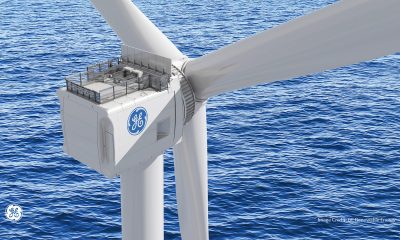
GE’s Haliade-X 12 MW prototype to be installed in Rotterdam
- Operations and Maintenance8 years ago
GENBA is on the rise; another milestone passed by in global existence
- Genel11 years ago
EWT launches the DW61, It’s most efficient and high energy producing wind turbine
- Genel11 years ago
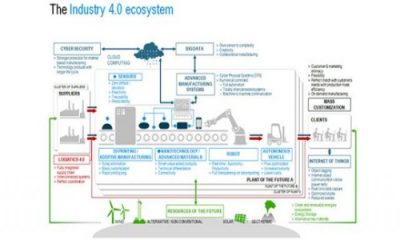
Internet of things will empower the wind energy power plants
- Turbine Technologies8 years ago
İğrek Makina focused on developing and producing Machine Tools and Wind Energy Turbines
- Legal & Financial Solutions8 years ago
Demand/Supply – Renewable energy with guarantees of origin (GO)
- Events8 years ago
Key Players from 10 Nations will Show Their Strong Positions at APWEE
- Turbine Technologies6 years ago
ENERCON installs E-160 EP5 prototype
- Turbine Technologies7 years ago
The Nordex Group receives first order for Delta4000 turbines from the USA
- Turbine Technologies8 years ago
ENERCON and Lagerwey together develop two new WEC types
- Genel10 years ago
Zorlu energy envisages a bold new future based on renewables